# Installing digiRunner API Management
1. To install digiRunner API Management:
* Go to our [GitHub repository](https://github.com/TPIsoftwareOSPO/digiRunner-Open-Source), and follow instructions in the `README.md` file.
* Install digiRunner using [Docker compose](https://docs.tpi.dev/get-started/installation/docker-compose).
{% hint style="warning" %}
**digiRunner** supports two database modes:
* **Temporary Database (Default):** The application uses a built-in in-memory database for quick setup and testing. This mode erases all data when you close or restart **digiRunner**. Use it to explore features or run quick tests.
* **Persistent Database:** To preserve data across restarts, refer to the [Docker Compose](https://docs.tpi.dev/get-started/installation/docker-compose) or [Docker](https://docs.tpi.dev/get-started/broken-reference) documentation for setup instructions. This ensures your data remains intact after application restarts.
{% endhint %}
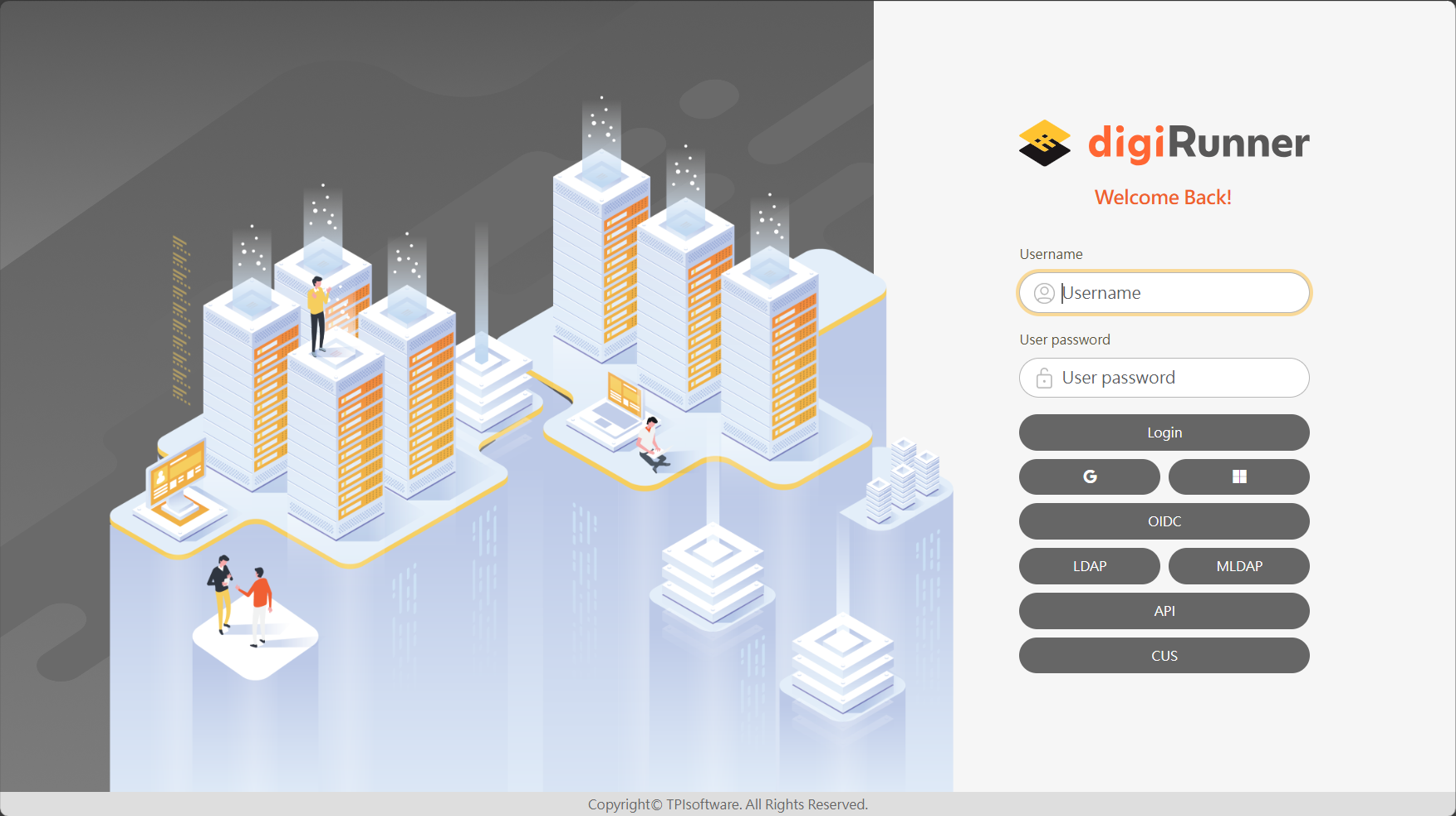
2. After completing the installation, open your browser and navigate to: `http://localhost:31080/dgrv4/login`
3. Log in using the default credentials:
* Username: `manager`
* User password: `manager123`
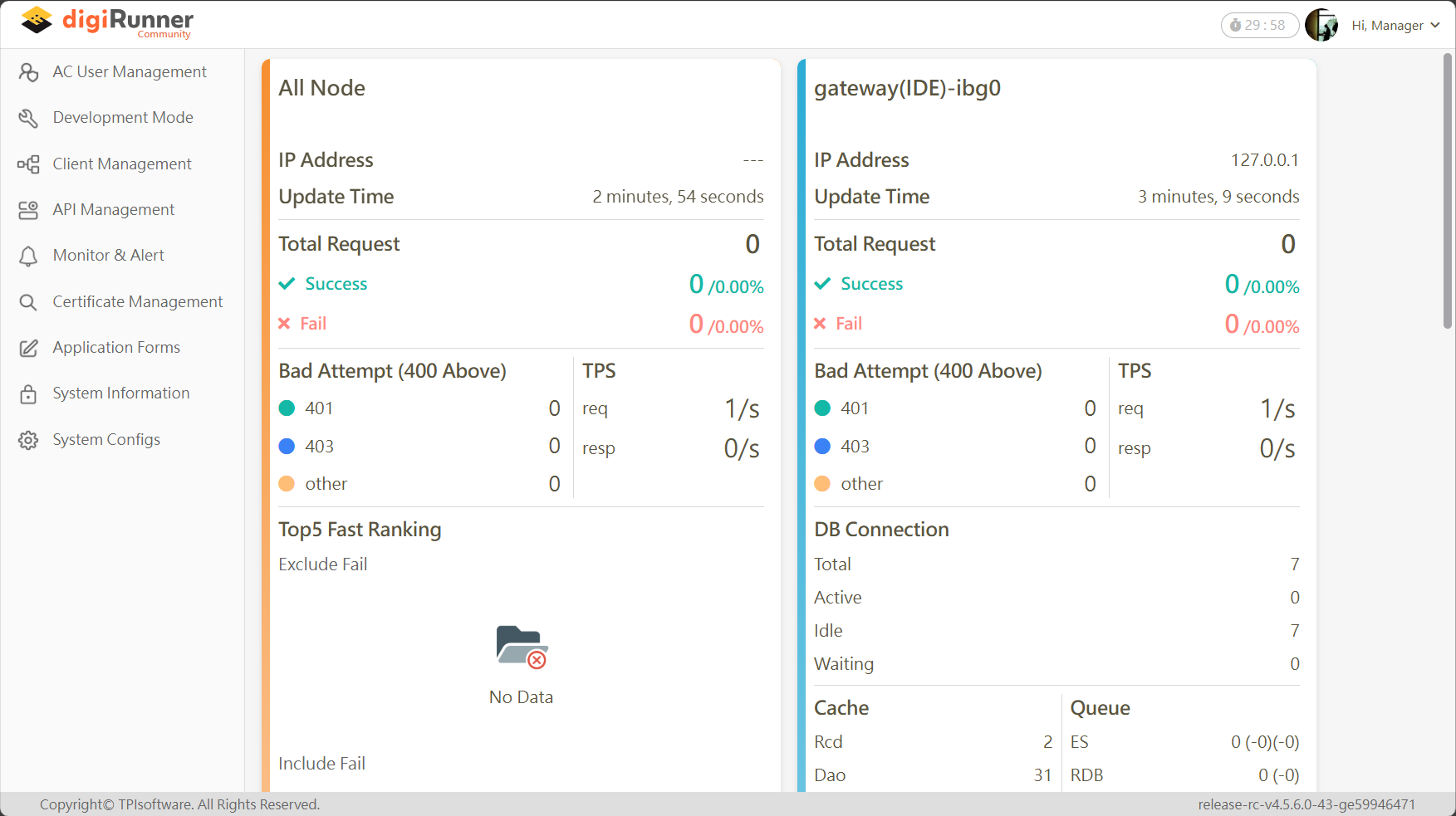
4. Upon successful login, you will see the text **digiRunner Community** displayed in the upper left corner.
Now, let's [register your first API with digiRunner](https://docs.tpi.dev/get-started/registering-your-first-apis-with-digirunner), and start to explore digiRunner's features!
{% hint style="info" %}
After installing digiRunner, configure an SMTP server to enable system-generated email notifications, such as account creation alerts, password reset messages, system warnings, and API key requests.
{% endhint %}
---
# Agent Instructions: Querying This Documentation
If you need additional information that is not directly available in this page, you can query the documentation dynamically by asking a question.
Perform an HTTP GET request on the current page URL with the `ask` query parameter:
```
GET https://docs.tpi.dev/get-started/installation.md?ask=
```
The question should be specific, self-contained, and written in natural language.
The response will contain a direct answer to the question and relevant excerpts and sources from the documentation.
Use this mechanism when the answer is not explicitly present in the current page, you need clarification or additional context, or you want to retrieve related documentation sections.